Dentine is a calcified connective tissue consisting of approximately 70% inorganic material and 10% water. Dentine resembles a honeycomb structure, constituted by millions of its morphological units, dentinal tubules; the tubular density varies from 40,000 to 70,000 tubules per square millimeter, Due to the tubular structure the dentine has relatively high-water content.


Dentine is a calcified connective tissue consisting of approximately 70% inorganic material and 10% water. Dentine resembles a honeycomb structure, constituted by millions of its morphological units, dentinal tubules; the tubular density varies from 40,000 to 70,000 tubules per square millimeter, Due to the tubular structure the dentine has relatively high-water content. Whenever pathological processes or dental operative procedures expose dentine, the intratubular interstitial fluid content is free to move in response to thermal, osmotic, evaporative, or tactile stimuli. The dentinal tubules represent the structural connection between the pulp and the dentine. The dentine should therefore be considered as a permeable membrane to operative treatments.
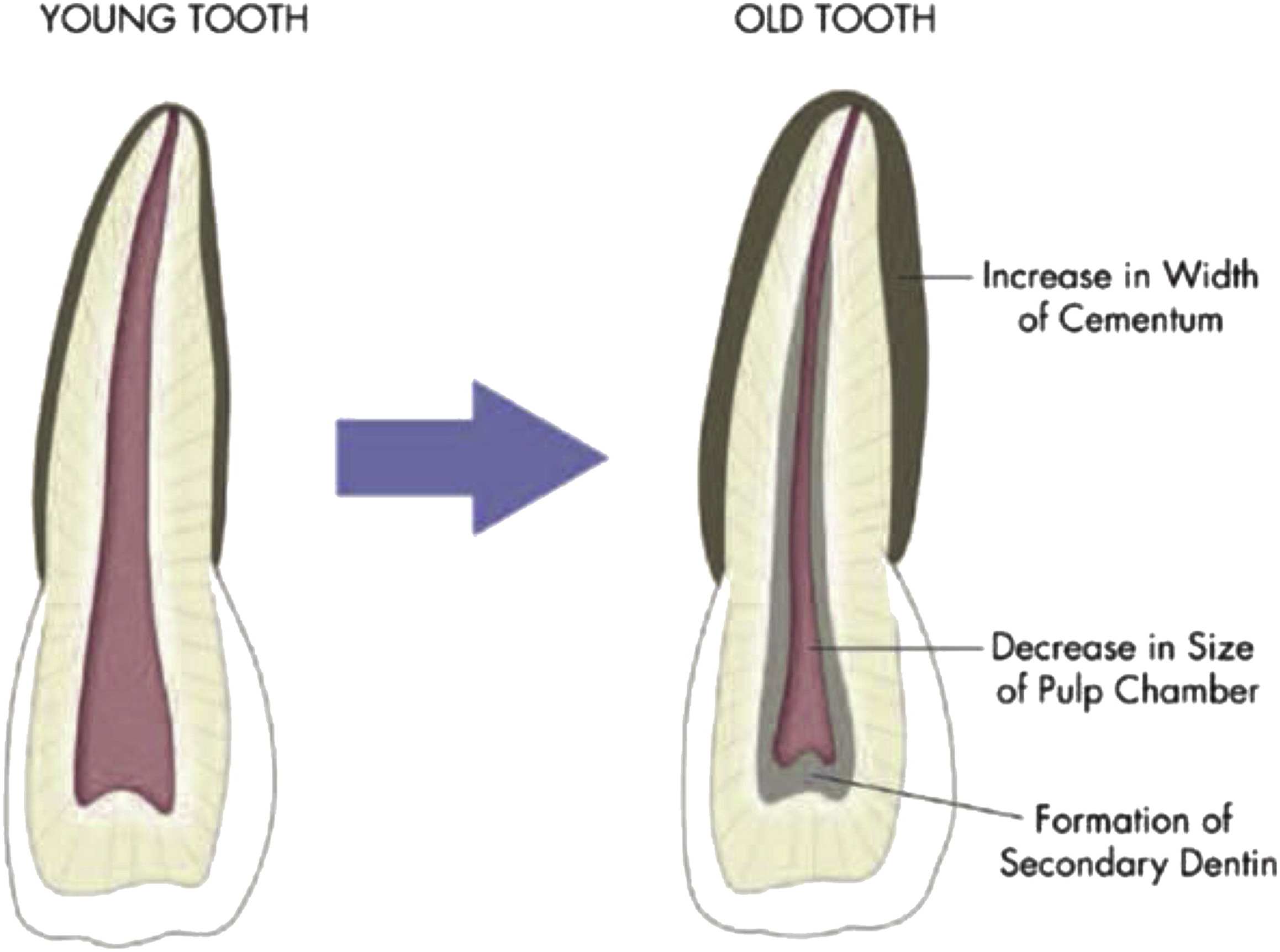
Through the known aging process, the dentine experiences numerous changes as well, such as secondary dentine depositions, reduced pulpal size, and less activity of odontoblasts. These changes can lead to several dental concerns, necessitating restorative measures and considerations to uphold oral health and function.
Changes observed in dentine over aging were as follows:
- Dentine thickness changes:
which occur because of the continuous deposition of reparative dentine and minerals into the dentinal lumens which in return reflects a reduction of dentinal tubules and in the interface of the dentine and the pulp thus reflecting a reduction of the volume of the pulp cavity. Carvalho, T.S,et al, 2007.
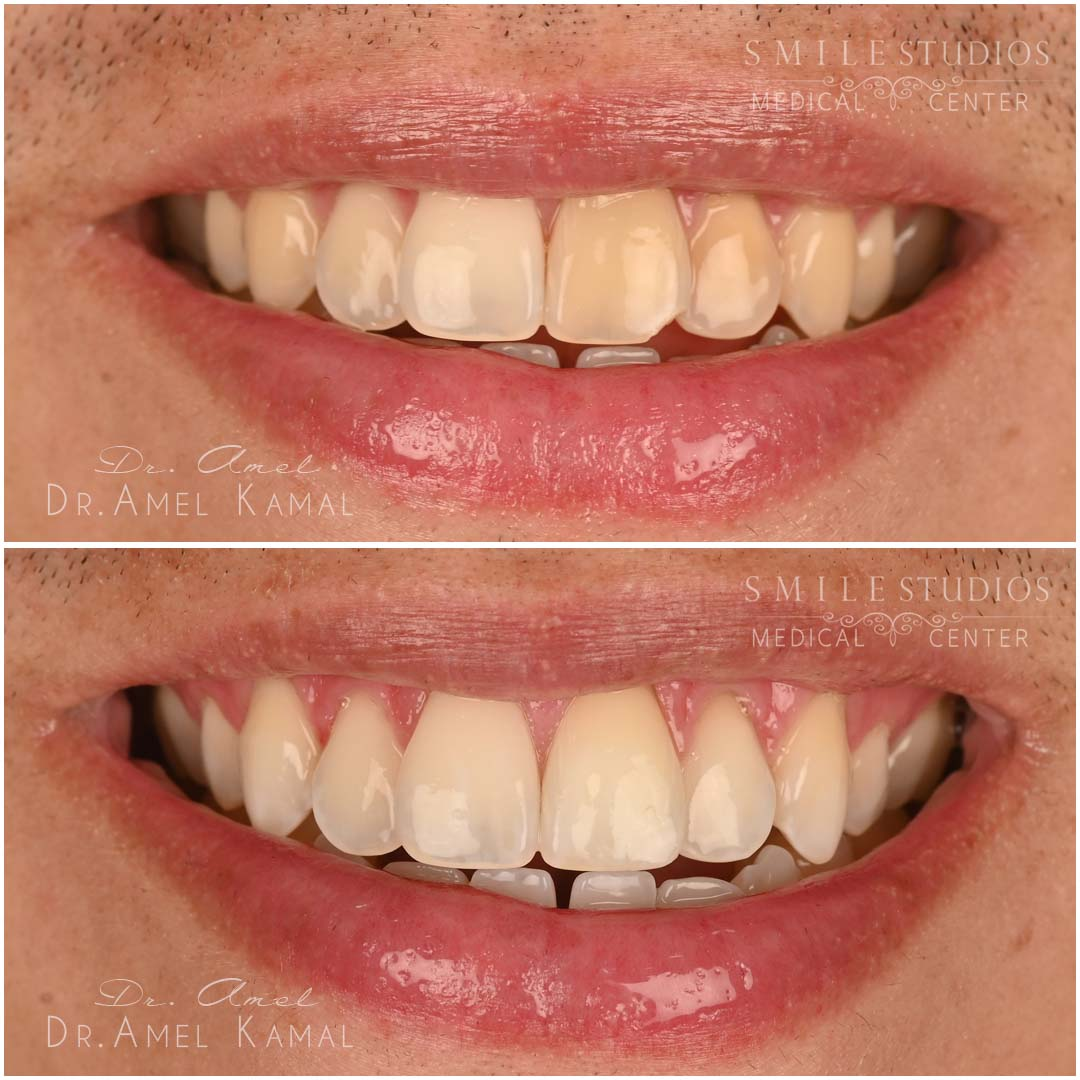
- Dentine Colour: Aging can also alter the colour of dentine, often resulting in a darker hue. As mentioned earlier, continuous deposition of the secondary dentin and modified dentinal tubules are considered the main contributing factors. Also, external causative factors would have an effect such as continuous exposure to smoking and dietary habits.
- Dentine Permeability: with the continuous deposition of the secondary dentin reduced amount of peritubular fluids, and increased mineralization; dentine over age starts to assume the function of the enamel.
Thus, decreasing the dentinal sensitivity and acting as a barrier against bacterial infiltration. Ghazali, F.B.C., 2003
- Dentine repair capability: Aging affects dentine’s ability to self-repair, leading to reduced capacity for healing in response to damage or decay. Consequently, external restorative interventions are necessary to maintain dental well-being. Huang, G.T.J., 201
- Mechanical properties change: Mature dentin demonstrated relatively impaired fracture toughness, and increased brittleness thus increasing the risk of fracture and compromised mechanical properties. Montoya, C, et al.2015
Multiple considerations in restorative dentistry have been addressed with the above discussed points related to structural and mechanical changes in Dentine over aging.
Endodontic prospect:
An initial challenge might be the pulpal thermal testing which might end up giving false negative results due to the dentine deposition and mineralization.
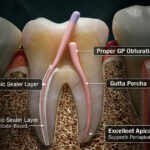
As root canal treatment is initiated; access cavity and root canal negotiation would be the greatest challenge because of the changes mentioned; as pulpal stones and orifices calcifications covering the orifices due to the dentine depositions, much narrower canals during preparation would represent a greater challenge and effort reducing instruments separation and ledges. Montoya, C.,et al,2015
Restorative prospect:
Considering the higher mineral content and increased hardness of the dentine the bond strength of the dental materials could also be affected to a certain extent, forming a thin hybrid layer of micro and macro tags in the bonding process. As aged dentine is more susceptible to demineralization thus remineralizing and antibacterial restorative materials should be considered.
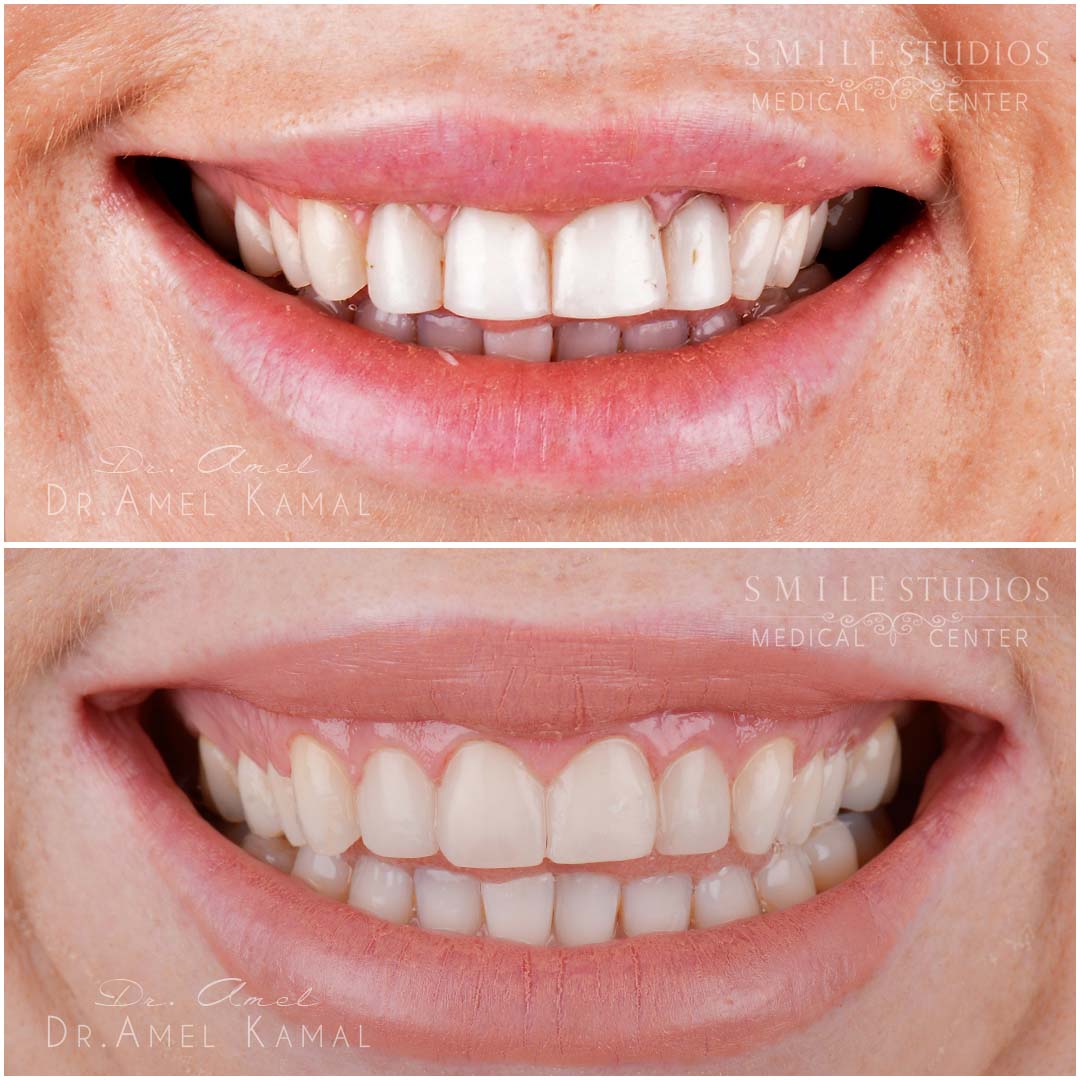
Based on the above restorative materials of choice for aged dentine should carry a few extra properties such as antibacterial, degradation resistance, wear resistance, occlusal forces absorbance, and reduced stress shrinkage. Nadig,et al.2011
In conclusion, aging leads to significant alterations in dentine, including structural changes and heightened susceptibility to various dental issues like sensitivity and decay. Nonetheless, advancements in restorative dentistry offer hopeful prospects for managing these transformations and preserving dental health in the aging populace.
References:
Philippas, G.G. and Applebaum, E., 1966. Age factor in secondary dentin formation. Journal of dental research, 45(3), pp.778-789.
Ketterl, W., 1983. Age-induced changes in the teeth and their attachment apparatus. International D
Ghazali, F.B.C., 2003. Permeability of dentine. The Malaysian journal of medical sciences: MJMS, 10(1), p.27.ental Journal, 33(3), pp.262-271.
Huang, G.T.J., 2011. Dental pulp and dentin tissue engineering and regeneration–advancement and challenge. Frontiers in bioscience (Elite edition), 3, p.788.
Surmenev, R.A., Surmeneva, M.A., Evdokimov, K.E., Pichugin, V.F., Peitsch, T. and Epple, M., 2011.
Gale, M.S. and Darvell, B.W., 1999. Dentine permeability and tracer tests. Journal of dentistry, 27(1), pp.1-11.
Weerakoon, A.T., Meyers, I.A., Thomson, D.H., Cooper, C., Ford, P.J. and Symons, A.L., 2022. Coronal dentin differs between young and mature adult humans: A systematic review. Archives of Oral Biology, 144, p.105553.
Montoya, C., Arango-Santander, S., Peláez-Vargas, A., Arola, D. and Ossa, E.A., 2015. Effect of aging on the microstructure, hardness and chemical composition of dentin. Archives of oral biology, 60(12), pp.1811-1820.
Nadig, R.R., Usha, G., Kumar, V., Rao, R. and Bugalia, A., 2011. Geriatric restorative care-the need, the demand and the challenges. Journal of Conservative Dentistry, 14(3), pp.208-214.
Book Now
It’s easy and free!