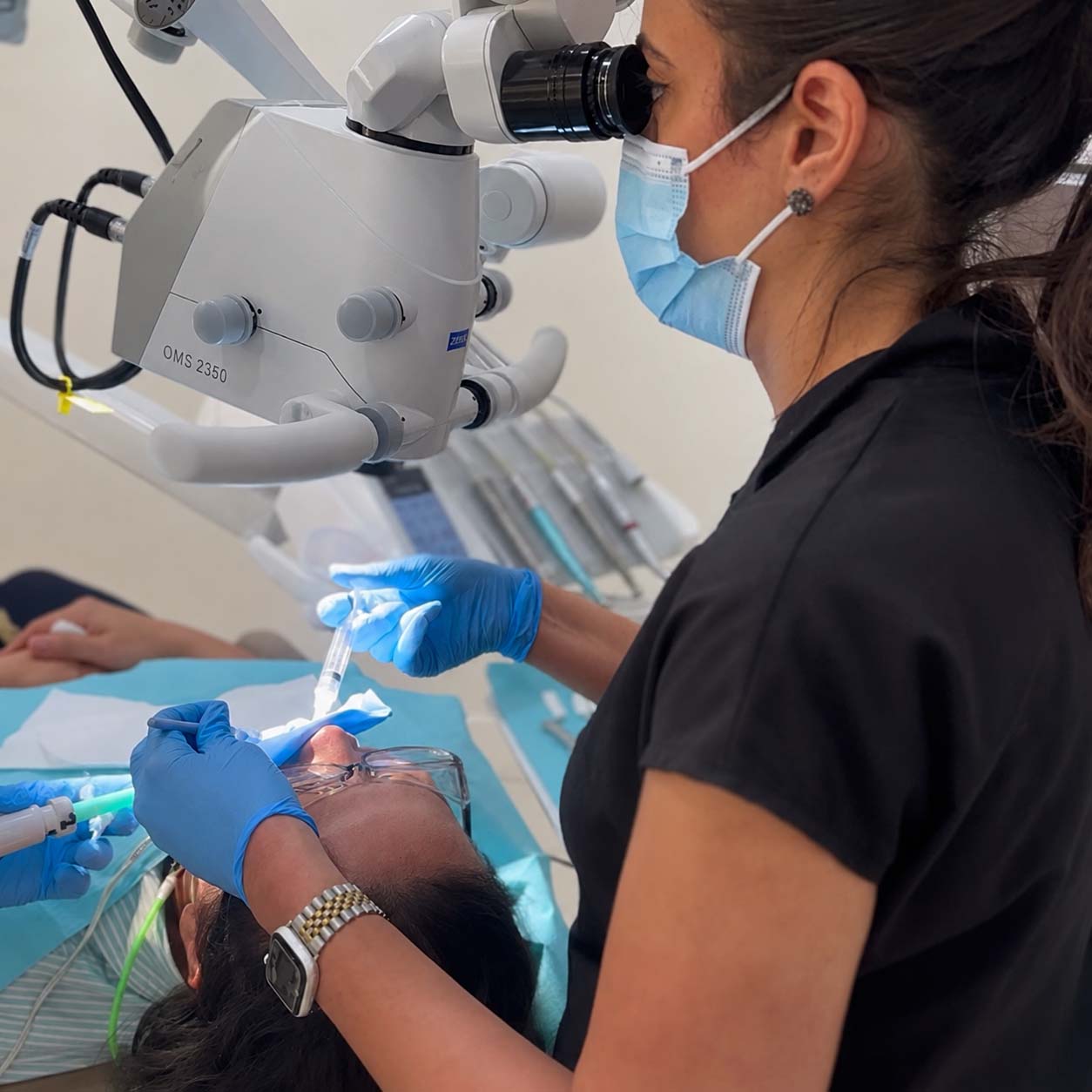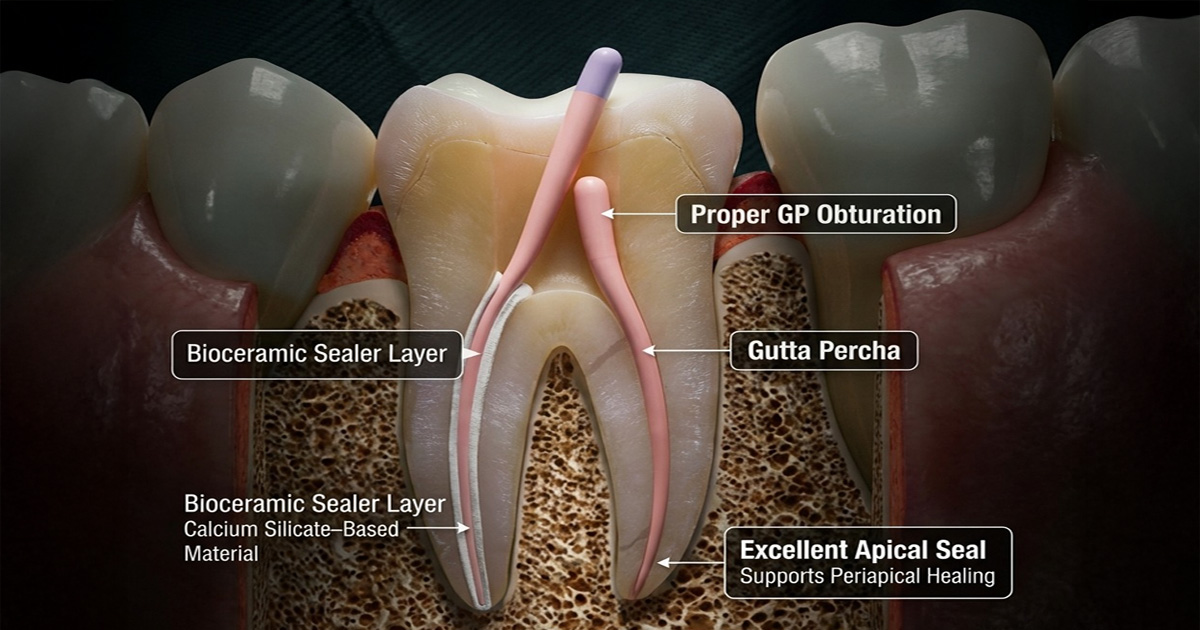
Bioceramic sealers have been gaining great attention in endodontics fields and have been increasingly spreading over the past thirty years due to their significant properties such as biocompatibility, sealing ability, minimal shrinkage following setting time, and properties. ZHEKOV et al 2021

Bioceramic sealers have been gaining great attention in endodontics fields and have been increasingly spreading over the past thirty years due to their significant properties such as biocompatibility, sealing ability, minimal shrinkage following setting time, and properties. ZHEKOV et al 2021
The general criteria of an ideal endodontic sealer are:
- Stability
- Biocompatibility
- Nonabsorbable and non-irritating properties
- Easy to handle
- Adequate opacity
- Non immunogenic nor carcinogenic
A Bioceramic endodontic sealer is defined generally as a non-sterile substance intended for professional use as an endodontic sealer, in which the setting reaction is based on hygroscopic inorganic components and water.
Bioceramic sealers are available in a powder form to be mixed with water before use or in a syringe with a pre-mixed paste to react with dentin fluid in situ.
They are classified according to the form of delivery or depending on the source of calcium silicate as follows:
- Based on the form of delivery- into A-premixed
B- non-premixed
- Based on the Source of calcium silicate
A-Natural
B-Synthetic
Composition and properties of Bioceramic sealers:
Primarily composed of ceramics such as calcium phosphates, calcium sulfates and silicate-based ceramics.
They demonstrated exceptional properties as:
- Biocompatibility: they are well-tolerated by surrounding tissues, without causing significant inflammation or adverse reactions, which is crucial for successful endodontic treatment. Gandolfi, et al 2015
- Antibacterial activity Bioceramic sealers possess intrinsic antimicrobial properties, which help in disinfecting the root canal system and reducing bacterial colonization. This property is beneficial in preventing reinfection and promoting the long-term success of endodontic treatment. Mahmoud Torabinejad 2024/Gnadolfi, et al 2015
- sealing ability; Bioceramic sealers have demonstrated superior sealing ability compared to traditional sealers. They form a tight seal within the root canal system, preventing microleakage and bacterial infiltration, which is crucial for the success of root canal therapy, which occurs by forming calcium hydroxide, hydroxyapatite, and a mineral-infiltrated layer on the dentin wall during the setting reaction. Almeida, et al 2017
- Osteogenesis potential and Bioactivity: Bioceramic sealers have the ability to promote tissue repair and regeneration due to their bioactive properties. They can stimulate the formation of hydroxyapatite, which enhances the integration of the sealer with dentin and promotes remineralization of surrounding tissues. Giacomino, et al 2019.
- RadioOpacity
- Dimensional Stability: Bioceramic sealers maintain their physical dimensions over time, minimizing the risk of shrinkage or expansion that could compromise the seal. This property ensures the long-term stability and integrity of the root canal filling. Ørstavik et al, 2011
Thus, the future of bioceramic sealers in endodontics appears promising with all the Innovations aimed at improving their handling characteristics, such as setting time and flowability, which will facilitate easier and more predictable placement within the root canal system.
Additionally, efforts are underway to optimize the bioactivity of bioceramic sealers, to accelerate tissue regeneration and thus promoting more efficient healing responses.
Furthermore, the integration of bioceramic sealers with advanced imaging modalities and instrumentation techniques, such as cone-beam computed tomography (CBCT) and reciprocating file systems, will enable more precise diagnosis, treatment planning, and execution of endodontic procedures.
In conclusion, bioceramic sealers represent a revolutionary advancement in endodontics, offering superior sealing ability, biocompatibility, and bioactivity compared to traditional sealers. Their widespread adoption has transformed the landscape of root canal therapy, paving the way for improved treatment outcomes and enhanced patient care.
References:
Ng YL, Mann V, Rahbaran S,LewseyJ,Gulabivala K.Outcome of primary root canal treatment:Systematic review of the literature – Part 2. Influence of clinical factors.Int Endod J.2008;41(1):6–31
ZHEKOV, K. and STEFANOVA, V.P., 2021. Definition and Classification of Bioceramic Endodontic Sealers. Folia medica, 63(6), pp. 901-904.
Mahmoud Torabinejad, DMD, MS 1. “In vitro bacterial penetration of coronally unsealed endodontically treated teeth”. 2024. Www.Jendodon.Com. https://www.jendodon.com/article/S0099-2399(07)80198-1/abstract.
1.Kharouf, N., Arntz, Y., Eid, A., Zghal, J., Sauro, S., Haikel, Y. and Mancino, D., 2020. Physicochemical and antibacterial properties of novel, premixed calcium silicate-based sealer compared to powder–liquid bioceramic sealer. Journal of Clinical Medicine, 9(10), p.3096.
Gandolfi, M. G. et al. (2015) Calcium silicate/calcium phosphate biphasic cements for vital pulp therapy: chemical-physical properties and human pulp cells response. Clinical oral investigations. [Online] 19 (8), 2075–2089.
Anon (2015) Reports on Endodontics from Federal University Provide New Insights (A new in vitro method to evaluate radio-opacity of endodontic sealers). NewsRX LLC.
Almeida, L.H.S., Moraes, R.R., Morgental, R.D. and Pappen, F.G., 2017. Are premixed calcium silicate–based endodontic sealers comparable to conventional materials? A systematic review of in vitro studies. Journal of endodontics, 43(4), pp.527-535.
Giacomino, C.M., Wealleans, J.A., Kuhn, N. and Diogenes, A., 2019. Comparative biocompatibility and osteogenic potential of two bioceramic sealers. Journal of endodontics, 45(1), pp.51-56.
Sen, H.G., Helvacioglu-Yigit, D. and Yilmaz, A., 2023. Radiopacity evaluation of calcium silicate cements. BMC oral health, 23(1), p.491.
Ørstavik, D., Nordahl, I. and Tibballs, J.E., 2001. Dimensional change following setting of root canal sealer materials. Dental materials, 17(6), pp.512-519.
Wang, Z., Shen, Y. and Haapasalo, M., 2014. Dentin extends the antibacterial effect of endodontic sealers against Enterococcus faecalis biofilms. Journal of endodontics, 40(4), pp.505-508.
Book Now
It’s easy and free!