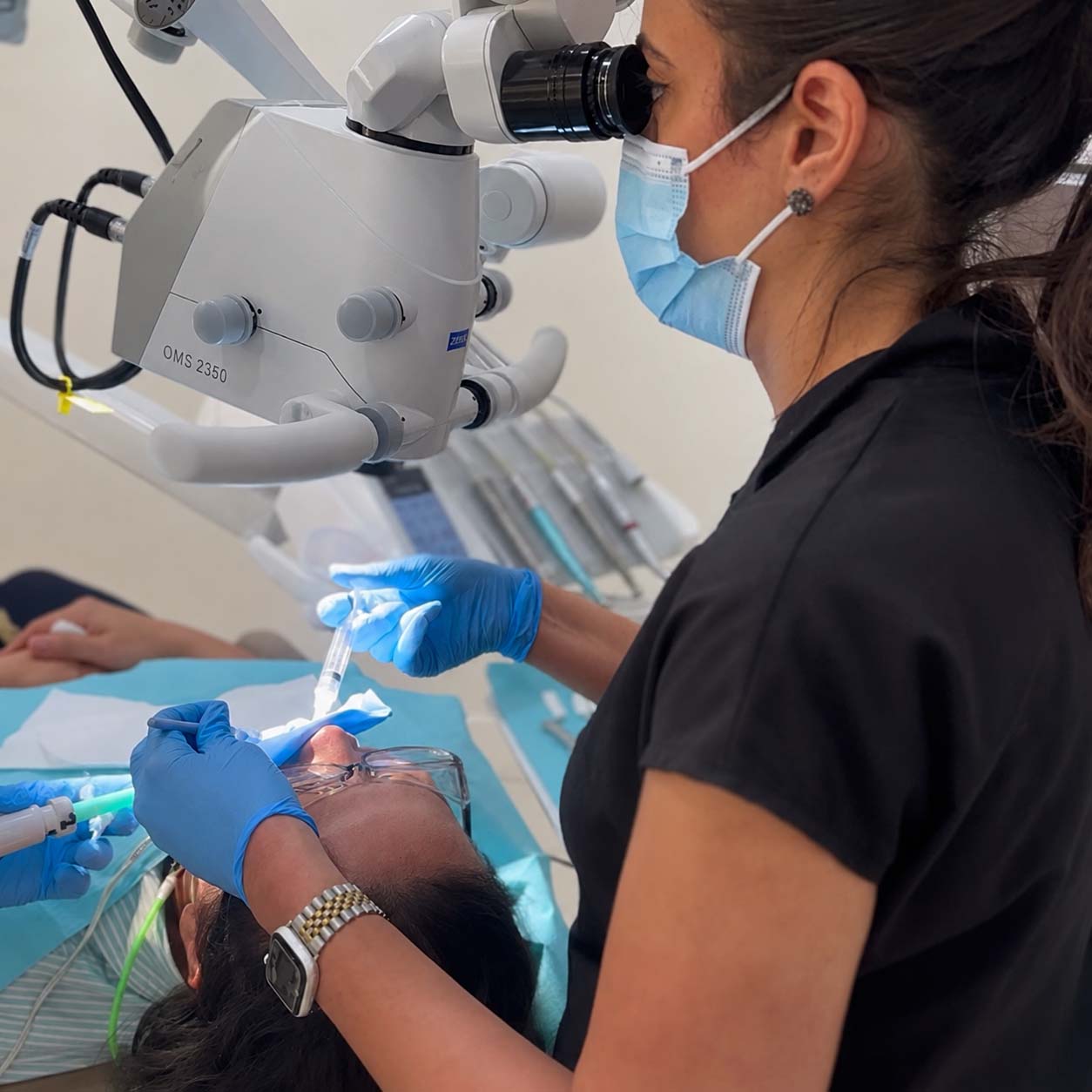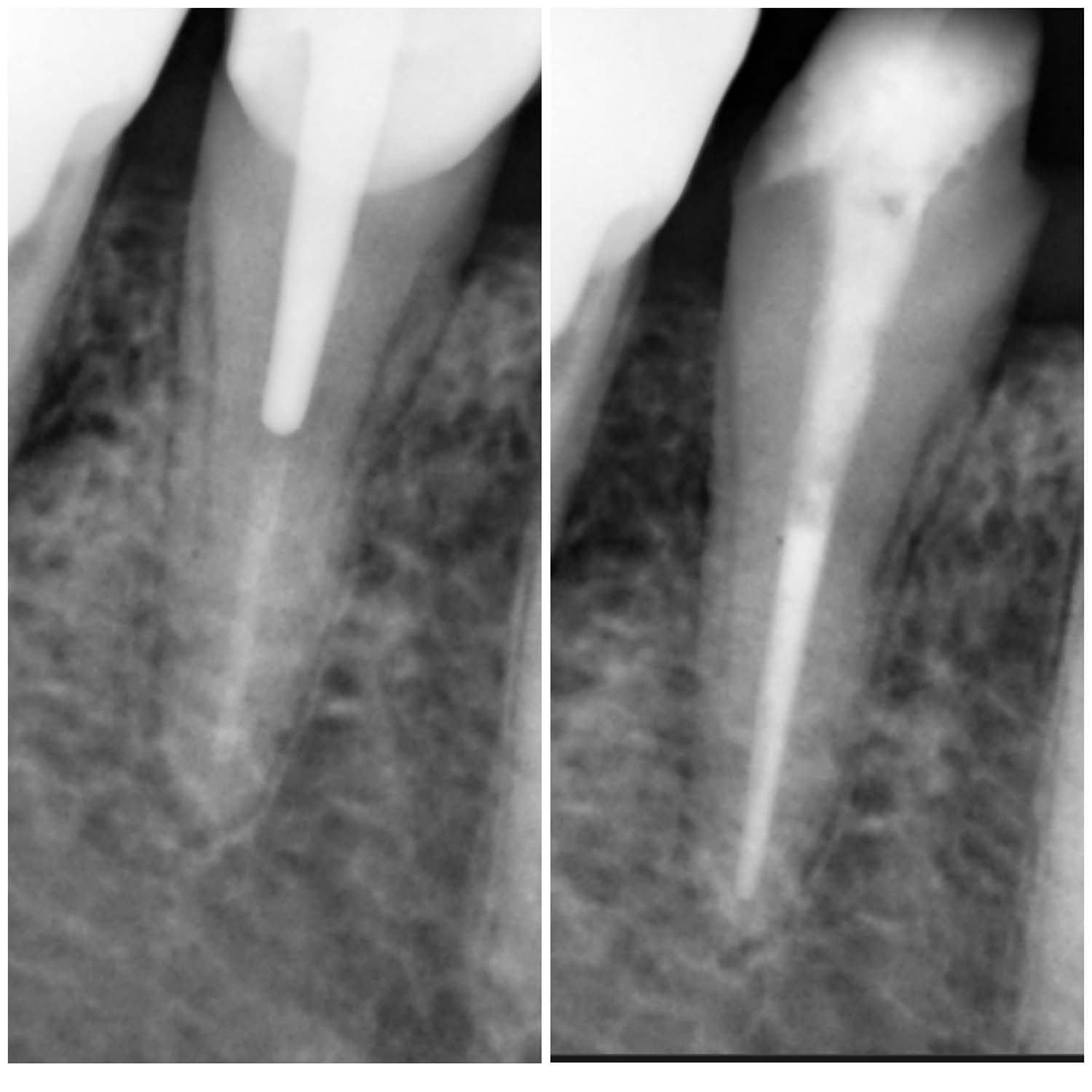
In a typical endodontic technique, root canal therapy removes diseased or injured pulp tissue, and disinfects and seals the root canal system. Following the procedure, the tooth structure becomes less elastic with reduced mechanical strength due to a significant loss of dental hard material leading to cracks or fractures.


In a typical endodontic technique, root canal therapy removes diseased or injured pulp tissue, and disinfects and seals the root canal system. Following the procedure, the tooth structure becomes less elastic with reduced mechanical strength due to a significant loss of dental hard material leading to cracks or fractures. it is critical to restore the tooth’s appearance and function. When a substantial amount of the tooth structure is destroyed, a post may need to be placed to support the remaining tooth structure and provide sufficient retention for the eventual restoration.
Indications for post placement:
The decision to place a post depends on several factors, including the amount of remaining tooth structure, the functional requirements of the tooth, and the esthetic considerations. Posts are generally indicated when there is insufficient tooth structure to retain a core and subsequent restoration securely. This situation often arises in the following scenarios:
Extensive Caries or Trauma: When a tooth has been extensively damaged due to caries or trauma, the remaining structure may not provide adequate support for a restoration without a post (Johnson & Leary, 2016).
Teeth with Thin or Weak Walls: Endodontically treated teeth are often more brittle and prone to fracture, especially if the remaining walls are thin (Goodacre et al., 2003).
Anterior Teeth and Premolars: These teeth are more likely to require posts due to their smaller size and the need for esthetic considerations (Schwartz & Robbins, 2004).
3. Types of Posts and Their Materials
Posts can be broadly classified into two categories: prefabricated and custom-made. Each type has its own advantages and limitations.
Prefabricated Posts: These are mass-produced and come in various materials, such as metal (stainless steel, titanium), fiber-reinforced composites, and zirconia. Fiber posts are particularly popular due to their flexibility, which reduces the risk of root fracture, and their esthetic properties (Akkayan & Gülmez, 2002).
Custom Cast Posts: These are fabricated to fit the specific anatomy of the root canal system. They provide an excellent fit and high strength but require more time and laboratory work. They are often used when a prefabricated post cannot adequately restore the tooth, such as in teeth with irregular canal shapes (Morgano & Brackett, 1999).
4. Clinical Considerations and Techniques
Proper post placement involves several critical steps to ensure optimal retention and minimize complications. These steps include:
Post Space Preparation: The post space must be prepared with caution to avoid excessive removal of dentin, which can weaken the tooth. The ideal post length is generally two-thirds of the root length or equal to the crown height (Schwartz & Robbins, 2004).
Post Selection: The post’s length, diameter, and material should be carefully selected based on the tooth’s anatomy and the expected functional load. Fiber posts are often preferred in esthetically demanding cases (Torbjorner et al., 1995).
Adhesive Techniques: Modern adhesive systems can improve the retention of posts and reduce the risk of microleakage. Bonding the post to the dentin can also reinforce the tooth structure (Sorrentino et al., 2007).
5. Biomechanical Considerations
Endodontically treated teeth are inherently more susceptible to fracture due to the loss of tooth structure and the altered physical properties of the dentin. The use of posts can redistribute occlusal forces and reduce stress concentrations, thereby enhancing the longevity of the restoration. However, improper post placement can lead to complications, such as root fracture or post debonding (Fokkinga et al., 2004).
6. Complications and Risks
The primary complications associated with post placement include:
Root Fracture: Excessive post space preparation or using overly rigid posts can increase the risk of root fracture (Johnson & Leary, 2016).
Post Loosening or Debonding: Inadequate adhesive techniques or poor post fit can result in post loosening over time (Goodacre et al., 2003).
Secondary Caries: If the margins of the restoration are not adequately sealed, secondary caries can develop, compromising the integrity of the restoration (Schwartz & Robbins, 2004).
7. Case Selection and Long-Term Outcomes
The success of post placement is highly dependent on proper case selection. Factors such as the remaining tooth structure, occlusal scheme, and patient habits (e.g., bruxism) must be considered. Long-term studies have shown that with proper case selection and technique, posts can significantly enhance the longevity of endodontically treated teeth (Morgano & Brackett, 1999).
8. Recent Advances and Future Directions
Recent advancements in materials and techniques have improved the predictability and success rates of post placement. The development of fiber-reinforced composite posts has provided clinicians with an esthetic and flexible option that reduces the risk of root fracture. Additionally, advancements in adhesive systems and digital technology have enhanced the precision and efficiency of post placement (Akkayan & Gülmez, 2002).
9. Conclusion
The use of posts in root canal treatment is a well-established practice with a strong foundation in clinical and biomechanical principles. While the decision to place a post must be made judiciously, proper technique and material selection can significantly enhance the functional and esthetic outcomes of endodontically treated teeth. Ongoing research and technological advancements continue to refine the practice, offering clinicians and patients better solutions for long-term dental health.
References
Johnson WT, Leary JM. “Endodontics: Principles and Practice.” 5th Edition. Elsevier; 2016.
Goodacre CJ, Bernal G, Rungcharassaeng K, Kan JY. “Clinical complications in fixed prosthodontics.” J Prosthet Dent. 2003; 90(1):31-41.
Schwartz RS, Robbins JW. “Post placement and restoration of endodontically treated teeth: a literature review.” J Endod. 2004; 30(5):289-301.
Sorrentino R, Gherlone EF, Calesini G, Zarone F. “Effect of post-retained composite restorations on the fracture resistance of endodontically treated teeth related to the post length and the post-core system.” Int J Prosthodont. 2007; 20(6):573-580.
Akkayan B, Gülmez T. “Resistance to fracture of endodontically treated teeth restored with different post systems.” J Prosthet Dent. 2002; 87(4):431-437.
Torbjorner A, Karlsson S, Odman PA. “Survival rate and failure characteristics for two post designs.” J Prosthet Dent. 1995; 73(5):439-444.
Morgano SM, Brackett SE. “Foundation restorations in fixed prosthodontics: current knowledge and future needs.” J Prosthet Dent. 1999; 82(6):643-657.
Fokkinga WA, Kreulen CM, Le Bell-Rönnlöf AM, Lassila LV, Vallittu PK, Creugers NH. “In vitro fracture behavior of maxillary premolars with metal crowns and several post-and-core systems.” Eur J Oral Sci. 2004; 112(5):457-463.
Popescu, A. D., Popa, D. L., Nicola, A. G., Dascălu, I. T., Petcu, C., Tircă, T., … & Gheorghiță, L. M. (2022). Post Placement and Restoration of Endodontically Treated Canines: A Finite Element Analysis Study. International Journal of Environmental Research and Public Health, 19(15), 8928.
Book Now
It’s easy and free!